
Padel rackets

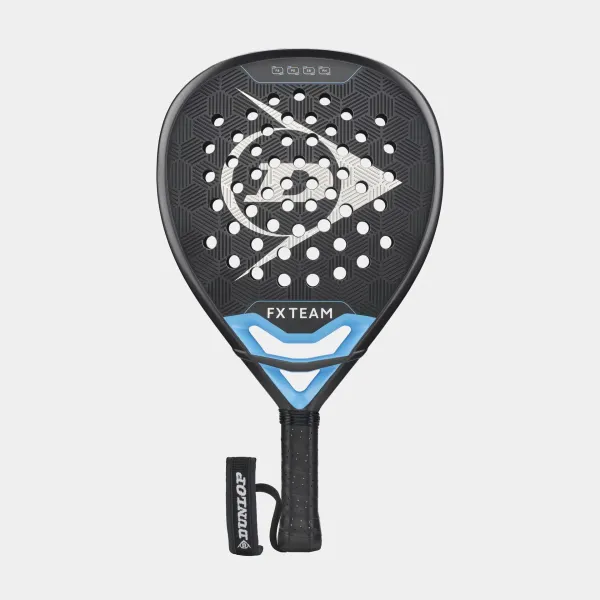
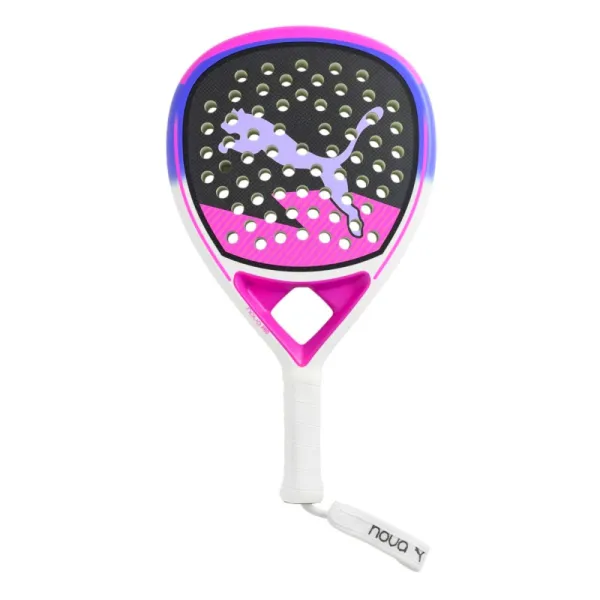

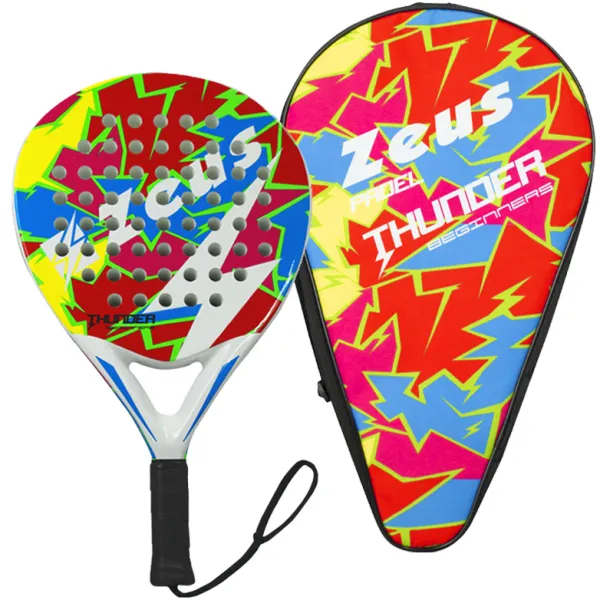


Padel is one of the fastest-growing racket sports in the world, and equipment technologies are developing alongside its popularity. While choosing a racket may seem like a single step for a beginner player, we recommend paying more attention to it. The right racket not only affects the playing experience and results, but is also important for injury prevention.
Racket shape – the basis of playing style
The shape is the first and most noticeable characteristic that determines the nature of a padel racket. There are three different shapes: round, teardrop, and diamond. To understand which one suits you best, you first need to consider two key factors that change with the shape — the location and size of the hitting zone (sweet spot), and the racket's balance point. Their combination determines the trade-off between power and control.
-
Hitting zone or "sweet spot" — this is the area where contact with the ball is the cleanest and most effective. When the ball hits this zone, energy transfer is maximized and the vibration transmitted to the hand is minimized. The larger this area, the more forgiving the racket is on off-center hits.
-
Balance point indicates where the racket's mass is concentrated. The farther the balance point is from the handle, the greater the inertia and hitting power, but the harder it is to maneuver the racket quickly.
Round padel racket – maximum control
The sweet spot of a round racket is centered and has a significantly larger area compared to other shapes, covering most of the racket face. In practice this means that even if the ball doesn't hit the racket perfectly, it is still more likely to fly in the desired direction with a stable speed.
The balance point of a round racket is low (close to the handle), which makes the racket very manageable. Because of the low balance point, the racket can feel lighter in the hand than its weight indicates.
Due to these properties, a round racket is ideal for beginners learning technique, as it forgives inaccurate shots. However, it is also preferred by many advanced defensive players who value accuracy and control over speed and power.
Diamond padel racket – maximum power
The diamond racket is designed with one main goal — maximum power and speed. Its sweet spot is located at the top and is the smallest in area compared to other racket shapes. This placement of the hitting zone requires excellent technical skill from the player, as the ball must be struck with high precision — otherwise the shot loses control and power.
The balance point is also shifted upward. This means most of the racket's mass is on its tip, creating the so-called hammer effect and giving shots greater power. However, this power comes at the expense of comfort. The downside of a diamond racket is its lower forgiveness and greater strain on the wrist.
Teardrop padel racket – two in one
The teardrop racket is a mix of the two previous types, and it is usually the most popular among recreational players. The sweet spot of this racket is located slightly above the center, being larger than that of a diamond racket but still slightly smaller than that of a round one.
The same goes for the balance point — it is "in the middle" (medium balance). This means the racket is not too heavy in the hand, providing sufficient speed for defense while having enough mass toward the end to give attacking shots the necessary punch and speed.
The teardrop racket is the ideal choice for a player who has outgrown the beginner level and wants to develop a more aggressive style of play.
Padel racket materials
The material of a padel racket determines the feel of the hit — it dictates how much the ball "bounces" off the racket and how much vibration reaches the hand. Here it is necessary to distinguish the racket core from the outer frame/face. The core affects the ball exit speed and comfort, while the face determines durability and precision. It is the combination of these elements that determines whether a racket suits a technical player, an attacking player, or an enthusiast who prefers a softer feel.
Core
Most rackets use EVA rubber (ethylene-vinyl acetate) or foam (polyethylene foam) for the core.
-
Foam. This is a porous material that, on closer inspection, resembles a sponge.
-
Properties: It is the softest material, acting like a spring. On slow shots the ball has very good exit speed, and it also dampens vibration well.
-
Cons: It is less durable than EVA and lacks power on strong attacking shots because the material is too soft and absorbs the impact energy.
-
-
EVA rubber. This is the most common material today. It has a smooth and dense texture and, unlike foam, is not porous. EVA is mainly divided into two types:
-
Soft EVA. Today's standard and the golden mean. It provides a good feel and comfort like foam, but is more durable and stable. Suitable for most recreational players.
-
Hard EVA. A stiff material preferred by professionals and attacking players. A hard core does not deform upon ball impact, which means all the striking force is transferred directly to the ball. This gives maximum power but requires excellent technique and is more demanding on the arm.
-
Face
-
Fiberglass. Cheaper, more elastic and softer. Often found on entry and intermediate level rackets.
-
Carbon fiber. More expensive, stronger and stiffer. Measured in K units (3K, 12K, 24K) – a smaller number (3K) means greater stiffness, while a larger number (24K) indicates more elasticity and comfort. Preferred by advanced and competitive players.
Racket face texture
-
Smooth surface — the classic and most common finish. A smooth surface provides maximum contact between the ball and the racket without additional friction, ensuring a clean hit. Recommended for beginners.
-
Rough surface (rugged/rough) either resembles sandpaper or has a 3D pattern. The purpose of the roughness is to increase friction between the ball and the racket, allowing the player to impart more spin to the ball. This is especially useful for vibora or bandeja shots, where spin helps keep the ball low.
Conclusion
There is no perfect padel racket — there is only the racket that perfectly matches your current level and physical attributes. For a beginner the best choice will be a round racket with a soft core and a fiberglass face (comfortable and forgiving). An advanced player should look at teardrop or diamond shapes with a carbon face and a stiffer core to make the most of their technical skills and hitting power. Before buying, it is always recommended to try and test the racket if possible, because the numbers on paper will never replace real feelings on the court.